







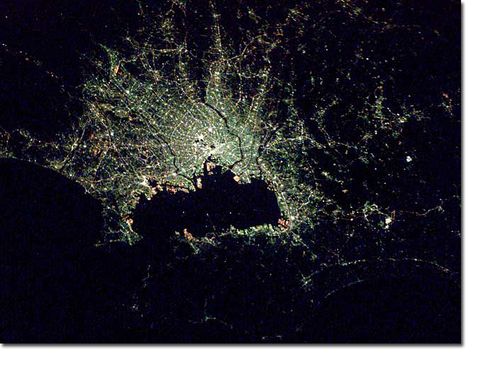
 Geoffrey West, President and Distinguished Professor of the Santa Fe Institute, led a team of scientists from various institutions that found that measures of wealth creation and innovation, increase with size, in such a way that doubling the size of a city increases its economic productivity per person by about 15%. This “universal” behaviour is seen worldwide from China, to Europe, to the USA. Their results show that all cities share common underlying dynamics and that, on the average, they are scaled versions of one another; despite obvious superficial characteristics, New York, Boston and Santa Fe are to a large extent scaled versions of one another!
For many, cities are viewed as the principal source of our social and environmental problems such as crime, pollution, poverty and, often, incidence of disease, but cities have also always been disproportionately the birthplaces for most of human prosperity, innovation and culture.
The results are particularly relevant at a time where for the first time in human history, the majority of people worldwide are now living in cities. Yet, urbanisation and its consequences remain poorly understood. What is fascinating and surprising about our results is that they show that the good things about cities – such as their innovation – and the bad ones – such as crime and the incidence of certain diseases – seem to increase predictably in the same proportion as cities become larger. Faster and faster rates of per capita growth with larger urban populations means the pace of life increases measurably with city size, as we have all experienced. Cities are social accelerators.

The researchers showed that city growth driven by wealth creation increases at a rate that is faster than exponential; the only way to avoid collapse as a population outstrips the finite resources available to it is through constant cycles of innovation. These effectively re-engineer the initial conditions of growth. But the greater the absolute population, the smaller the relative return on each such investment – new ideas must come ever faster. Thus, the bigger the city, the faster life is; but the rate at which life gets faster must itself accelerate to maintain the city as a growing concern so much so that to maintain growth, major innovations must now occur on time-scales that are significantly shorter than a human lifespan.”In this crucial sense cities are completely different from biological organisms, which slow down with size; their relative metabolism, growth rates, heart rates, and even rates of innovation – their evolutionary rates – systematically – and predictably – decrease with organismal size,” West said.


